Honey
Sidr and bidara: the same tree?
The tree both Yemenis and Malays know.

Short answer: almost. Sidr is the Arabian bidara. It belongs to the same family of trees as the bidara you know in Malaysia, the jujube trees. They're close cousins, and Sidr honey comes from the small flowers of the Arabian one.
Almost every Malaysian Muslim knows daun bidara. Many have seen the leaves used in mandi bidara, or grow a pokok bidara near the house. So when people hear "Sidr honey" for the first time, it's natural to ask: is that the same tree?
Two cousins in one family
Both trees belong to the jujube group of plants, known by the scientific name Ziziphus. They share the same small, shiny leaves, thorny branches and little yellow-green flowers.
- The bidara most common in Malaysia is usually Ziziphus mauritiana, often called Indian jujube.
- The Sidr of Yemen and Arabia is Ziziphus spina-christi, sometimes called bidara Arab.
Different species, same family, same kind of tree. That's why the Arabian tree is often simply called bidara in Malay.
A tree with deep roots in both cultures
Sidr is one of the trees named in the Quran, and it has been part of daily life in Arabia for centuries. It grows where few trees can: in the dry wadis of Hadramawt, with roots reaching deep for water. In Malaysia, the bidara has its own place in tradition, mostly through its leaves.
From leaves to honey
Here's the difference that matters. In Malaysia, people mostly use bidara leaves. Sidr honey comes from the tree's flowers.
Once a year, the Sidr tree fills with small yellow flowers. The bees go out before sunrise. Beekeepers carry their hives from valley to valley, following wherever the Sidr is blooming. What the bees bring back becomes one of the most prized honeys in the Arab world.
Why Sidr honey is special
- Once a year. The Sidr tree flowers only once a year, and the harvest is small. When it runs out, we wait for next season.
- The taste. Thick like caramel, smooth on the throat, with a taste that fades slowly.
- Kept for guests. In Yemen, Sidr is the honey families keep for guests and special moments.
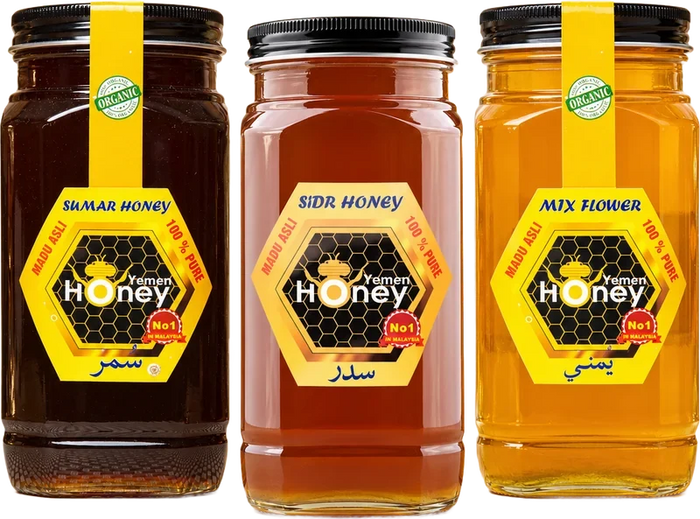
Taste it for yourself: Sidr Hadramawt Honey. Or compare it with the other two Hadramawt honeys in our 1-minute guide to Sidr, Sumar and Marai.
And the leaves?
We also carry Sidr (bidara) leaf powder for hair and skin care. It's for external use only, and it's a different product from the honey.
Want to know more about where our honey comes from? Visit Origins, or send PILIH on WhatsApp and ask us anything.